Industrial valves
Industrial valves for process control and automation
Industrial valves are a core component of process control, automation, and safety in modern industry. Selecting the right valve ensures controlled flow, reliable operation, and long service life even in demanding environments.
At Wexon, you’ll find a comprehensive range of industrial valves for various industries, supported by expert guidance and available as pre-assembled valve packages when needed.
Not sure which valve fits your application? We’re here to help you choose the right solution.
Industrial valve types and solutions for different applications
Wexon’s portfolio includes a wide range of industrial valves, such as:
- - ball valves
- - butterfly valves
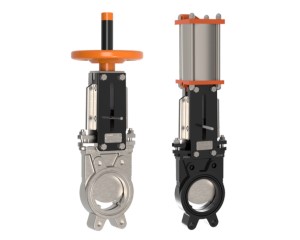
- - knife gate valves
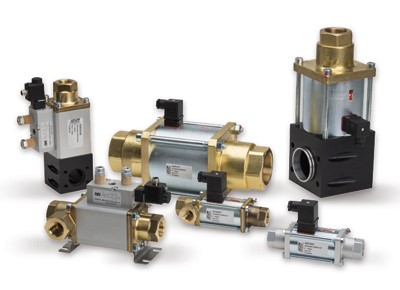
- - coaxial valves
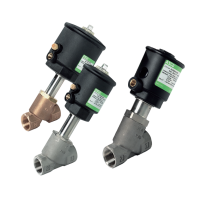
- - globe valves
- - check valves
- - Y-strainers (dirt strainers)
- - 3-way valves
Valves are available with multiple connection options:
- - threaded ends
- - flanged connections
- - wafer-type designs
- - welding ends (both long and short)
Actuators and automation – how valves become part of a smart system
Industrial valves can be equipped with different actuators depending on the application. Options include:
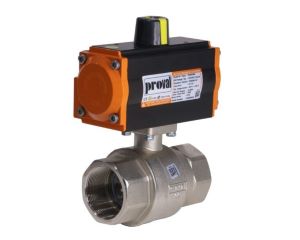
- - pneumatic quarter-turn actuators (spring-return or double-acting)
- - 180° pneumatic actuators
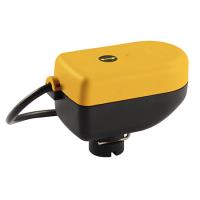
- - electric actuators ranging from compact units to heavy-duty solutions
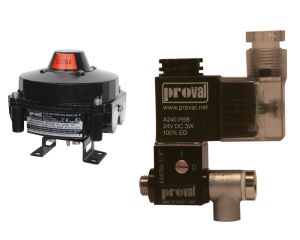
We also deliver fully assembled valve packages and customer-specific configurations. These can be complemented with Wexon’s extensive range of solenoid valves, creating a complete and ready-to-install solution.
Typical media and industries where valves are used
Industrial valves are commonly used with:
- - water and wastewater
- - oil
- - gases
- - steam
Valves play a key role in industries such as process manufacturing, energy, chemicals, food production, and water treatment.
Local valve assembly in Helsinki ensures flexibility and speed
Wexon operates its own valve assembly facility in Helsinki. We:
- - assemble and modify valve packages
- - support urgent deliveries
- - ensure each solution fits the customer’s application
While many valves are delivered factory-automated, local assembly adds flexibility and significantly reduces lead times.
Stock availability, quality and certifications
The most common industrial valves are available directly from our local stock. Our manufacturing partners are certified according to ISO 9001, ISO 14001, and ISO 45001, ensuring consistent quality and reliability even in demanding applications.
In-stock products can be ordered directly from our online store, while the full range is available in our product catalog. Explore the new valve catalog, which guides you in selecting the right valve.
How to choose the right industrial valve
Selecting the right valve depends on several factors, including:
- - the medium and operating conditions
- - pressure and temperature
- - materials and connections
- - automation needs
- - applicable standards and safety requirements
A properly selected valve improves process reliability, reduces maintenance costs, and extends system lifetime.
Contact us – we’ll help you choose the right valve solution. Or start your selection using the new valve catalog.
Why Wexon?
- - Wide, high-quality range of industrial valves for various applications
- - Fast delivery supported by local assembly in Helsinki
- - Expert technical support to ensure the right valve selection
- - Solution-oriented approach tailored to your process needs
- - Reliable process control with improved safety and longer system lifetime
Special product pricing is available when you log in to the online store.
FAQ
1. What factors should I consider when selecting an industrial valve?
Key factors include the medium, pressure, temperature, connection type, automation needs, materials, and operating environment. Choosing the right valve improves reliability and reduces lifecycle costs.
2. What is the difference between a ball valve and a butterfly valve?
A ball valve provides tight shut-off and is ideal for on/off applications. A butterfly valve is lighter and more compact, especially in larger pipe sizes, and is commonly used in water and wastewater systems.
3. What is the difference between 2-way and 3-way valves?
A 2-way valve controls flow in a single pipeline (open/close), while a 3-way valve allows flow diversion or mixing between two lines, offering greater flexibility.
4. When should I choose a pneumatic vs. an electric actuator?
Pneumatic actuators are ideal for fast and demanding applications where compressed air is available. Electric actuators are suitable when precise control is required or compressed air is not available.
5. What connection options are available for industrial valves?
Common options include threaded, flanged, wafer-type and welded connections. The right choice depends on pipeline design, standards, pressure, and maintenance requirements.
6. What is a corrosion-resistant (acid-resistant) valve and when is it needed?
These valves are made from materials that withstand corrosion and aggressive media. They are typically used in chemical and process industries where standard materials are not sufficient.
Ball valves
Butterfly valves
Knife gate valves
Globe valves
Automated valve packages
Coaxial valves
Check valves
Actuators
Actuator accessories
Y-strainers